Friday, 27 January 2012

Dingo | Wildlife Photos and Info


The Dingo is the largest mammal predator in Australia and was introduced some 3-5000 years ago from Southeast Asia, where it is still common (all subsequent information refers only to Australian Dingoes). They are thought to have spread rapidly across the continent of Australia, probably with human help, and are thought at least partially responsible for the extinction of the marsupial thylacine and devil from the mainland. This was probably due to the dingoes' superior hunting ability, especially in times of drought, when they will hunt in packs. It is starting to be recognised that dingoes play a key role in the protection of Australian wildlife.

Dingoes are an opportunistic carnivores (meat eating) predator hunting mainly at night. They prefer mammals but this diet can be supplemented by reptiles insects etc. The size of their prey ranges from small rodents, rabbits lizards through to sheep and kangaroos. dingoes usually hunt alone or in pairs but when small game is scarce and larger prey must be tackled, cooperative hunting takes place.

Dingoes readily breed with domestic/feral dogs and as a result the number of purebred animals is rapidly diminishing. It is thought that this process cannot be halted as long as baiting of dingoes continues (dingoes with stable pack structures probably will not tollerate feral dogs) and as such the extinction of the purebred dingo is thought likely.
 Dingo 
 Dingo 
 Dingo 
 Dingo 
Dingo 
Read more ...

Discus | Fish Info and Photos


The Discus is a large cichlid from the Amazon River, its tributaries and flood planes, in South America. Discus and its variants were first described in 1840 by Dr. Heckel as Symphysodon discus, this name is now in use for the Heckel discus variant. The three "original" colour variants received their own name, the Green Discus Symphysodon aequifasciata aequifasciata, the brown discus Symphysodon aequifasciata axelrodi, and the blue variant Symphysodon aequifasciata haraldi.

The Discus today is an incredibly popular aquarium species and it is thought to be one of the most written about tropical fish, over a period of just 50 years. Although fish today are all thought to have come from the green, brown and blue discus in the wild, others colours are much more common in tanks including yellow, black and red. Today there is a major industry behind the captive breeding of discus, which primarily occurs in fish farms in a number of countries in Asia. They are relatively peaceful fish, co-inhabiting their surroundings with other, generally smaller fish that provide no competition for food. Today, the discus is listed as a Threatened species in it's natural habitat meaning that if the situation progresses unchanged, the discus will be at threat from extinction in the wild in the near future. Although many variations of discus occur in tanks around the world, population numbers of the original discus species in the wild are declining, primarily due to the decreasing quality of the surrounding water.
 Discus 
 Discus 
 Discus 
 Discus 
 Discus 
Discus 
Read more ...

Saturday, 21 January 2012

Dodo | Info-History and Photos


The Dodo were huge birds of unknown species that existed only on the island of Mauritius which had no human habitation prior to 1598. Due to its short wings and bulky body the dodo could not fly or flee in the face of danger.For many years people have been using the above description when referring to the Dodo. However, new research carried out in the United Kingdom has revealed two important things we did not know before about this extinct bird.

The dodo had a large body, stubby wings, a small, curved tail, short legs, and a large beak. The feathers of the dodo were grey, black and white in colour and the large curved beak of the dodo is one of it's most distinctive features. The dodo is a large sized bird that adapted to a life without large ground-dwelling predators, which led to the dodo to behave quite unusually for a bird. Despite having wings, the dodo was unable to fly as they were quite too small and weak to support the rounded body of the dodo. The dodo was also known to have been fearless of the European invaders which ultimately led to the demise of the species.

Dodos may have thinned the Mauritius forests, and some plants may have come to depend on them to spread their seeds. One of the brighter aspects of recent history indicates that some human beings are now desperately trying to save various endangered species, although considering the increase in the populations of humans and the space they are always occupying and their continuous acquisition of natural resources, this may be a losing battle.
 Dodo
 Dodo
 Dodo
Dodo
Dodo
Read more ...

Dog | Info and New Photos


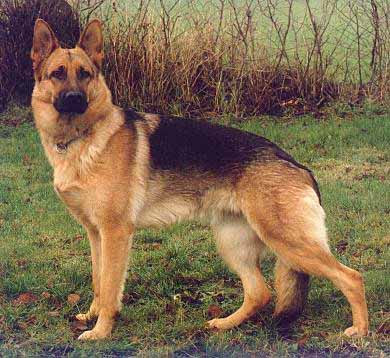
The dog is one of the most popular pets in the world. It ordinarily remains loyal to a considerate master, and because of this the dog has been called man's best friend. Class distinctions between people have no part in a dog's life. It can be a faithful companion to either rich or poor.

Dogs have been domesticated for most of human history and have thus endeared themselves to many over the years. Stories have been told about brave dogs that served admirably in war or that risked their lives to save persons in danger. When Pompeii--the Roman community destroyed by Mount Vesuvius in AD 79--was finally excavated, searchers found evidence of a dog lying across a child, apparently trying to protect the youngster. Perhaps few of the millions of dogs in the world may be so heroic, but they are still a source of genuine delight to their owners.

Dogs are not always well thought of, however. In recent years dogs in the city have been in the center of controversy. Some people have criticized dog owners for allowing their pets to soil sidewalks and lawns, although in some cities laws oblige owners to walk their dogs along street curbs. In turn, dog owners have argued that the animals serve as protection against vandals and burglars and thus protect their detractors as well as their owners. Visit Here for more about Dog.
 Dog
 Dog
 Dog
 Dog
 Dog
 Dog
Dog
Read more ...

Dolphin | Info and New Photos


Dolphins have been interacting with humans for as long as we have known of their existence. During this time, their more dangerous predator and the only one that have dramatically reduced dolphin population is the human. Even though we all agree that Dolphins are wonderful creatures that seem to be extremely intelligent and friendly, we still are a huge threat for dolphins.

Dolphins often leap above the water surface, sometimes performing acrobatic figures (e.g. the spinner dolphin). This and other behaviour is interpreted as playing. They are capable of diving up to 260 m deep and 15 min long, but rarely stay underwater longer than few minutes. Frequently dolphins will accompany boats, riding the bow waves. They are also famous for their willingness to occasionally approach humans and interact with them in the water. In return, in some cultures like in Ancient Greece they were treated with welcome; a ship spotting dolphins riding in their wake was considered a good omen for a smooth voyage.
Dolphins are predators, chasing their prey at high speed. The dentition is adapted to the animals they hunt: Species with long beaks and many teeth forage on fish, whereas short beaks and lesser tooth count are linked to catching squid. Some dolphins may take crustaceans. Usually, the prey is swallowed as a whole. The bigger species are capable of eating marine mammals, especially the orca, which kills even large whales.
 Dolphin
 Dolphin
 Dolphin
 Dolphin
Dolphin
Read more ...
Related Posts Plugin for WordPress, Blogger...
Pin It button on image hover