Showing posts with label Seals. Show all posts

Monday, 26 November 2012

Harp Seal | Cute Animal Interesting Facts & Images


The Harp Seal is an ear-less seal animal type local to the waters of the North Atlantic and Arctic Oceans. They are likewise regarded as the 'saddleback' seals, owing to the dark design on their back, which takes after a seat to a certain degree. Not numerous individuals are cognizant of the way that the binomial name for the harp seal species is Pagophilus groenlandica, which truly means the ice darling from Greenland. 

Harp seals are local to the North Atlantic and Arctic Oceans, and spend the greater part of their lives within the water. Their eating methodology comprises of almost 70 diverse species of fish and spineless creatures, and they can plunge down to profundities of 1,200 feet to follow their prey. The seals' reproducing grounds incorporate the St. Lawrence bay, beachfront Labrador and Newfoundland. Many seals total on ice packs throughout mating season, which occurs between February and March. They moreover shed throughout this time, shedding their hide and developing another layer. 
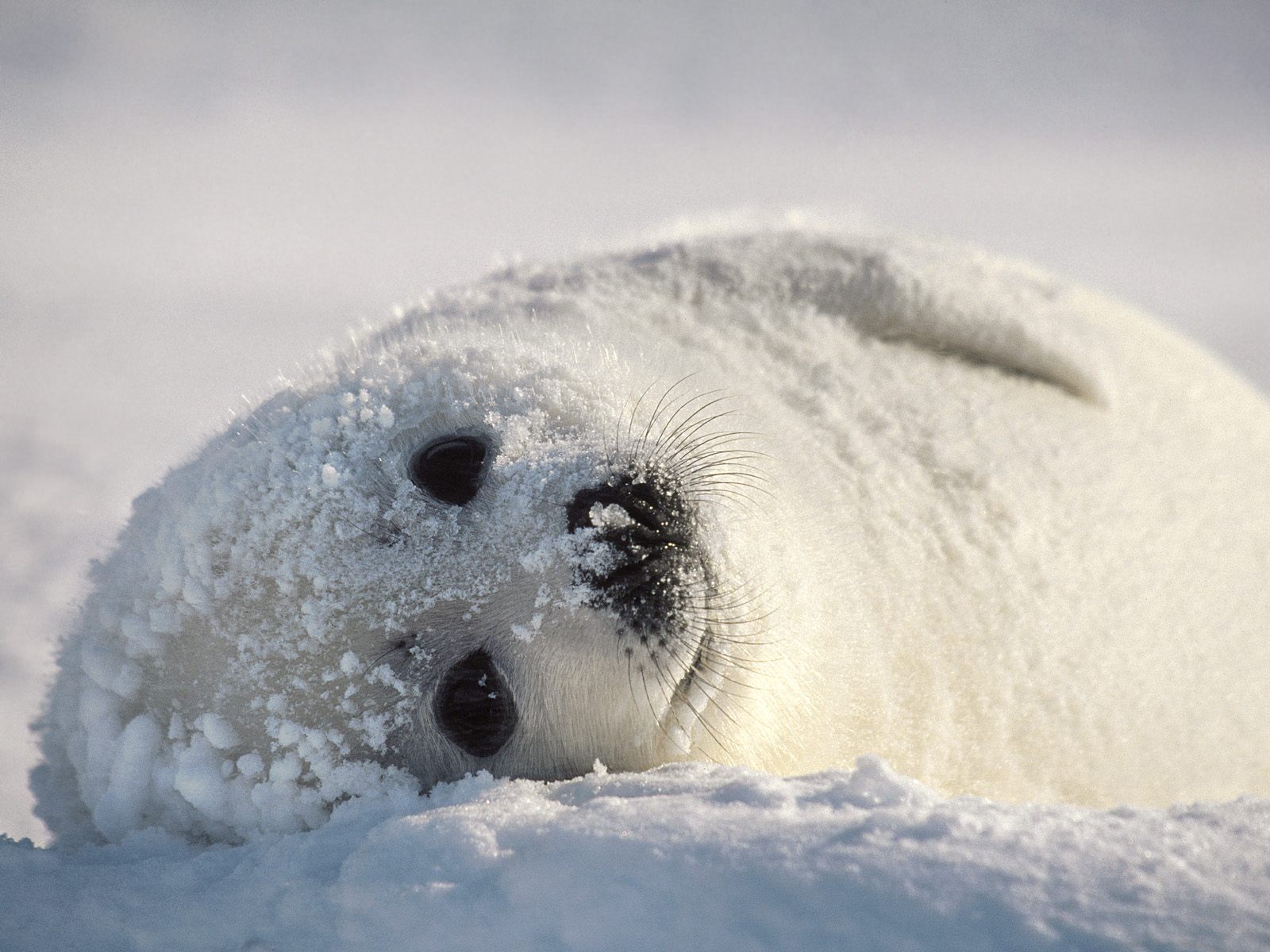
Harp seals are rapacious warm blooded animals which will almost always eat a wide mixed bag of nourishment good to go in their characteristic living space. The long catalogue of ocean creatures which constitute their eating regimen incorporate crabs, eels, shrimps, squids, plankton, and at times even jellyfish. With respect to the adolescent ones, they most frequently eat the mother's drain. When they begin wandering into the waters, their dietary dispositions update to the nourishment origin ready in the water. 
 Harp Seal
 Harp Seal
 Harp Seal
 Harp Seal
Harp Seal
Read more ...

Wednesday, 21 November 2012

Leopard Seals | All Info & Photos


Leopard Seals are earless seals, and in addition reputed to be the ocean Leopard. They are lone (exist on their particular), and occupy Antarctic and sub-Antarctic locales, anyway can once in a while be discovered as far north as South America, Australia and New Zealand. They are named for the spotty designs on their hide. They are regarded as wild pursuers of prey. 

Leopard Seals is tall and husky, with a dull back and faded on its paunch. Females are a little more imposing than the guys. The front teeth are sharp as the previously mentioned of different carnivores, at the same time their molars secure as one a way that permits them to sifter krill from the water, so that the seal crabeater seal. The panther seal exists vulnerable waters around Antarctica. Little folks are regularly in the north. The panther seal is a single animal, and met in little gathers just when the time is now to mate. 

Leopard Seals is striking, capable and odd. In water, there's an almost negligible difference between scientific interest and voracious conduct, and can "play" with the penguins did not expect to consume. There are moreover records of panther seals ambush jumpers. The Leopard Seal is just orca near the top predators of the Antarctic. The more minor seals undoubtedly consume generally krill, squid and fish as well. More substantial Leopard Seals no doubt switch to krill prey more noteworthy, incorporating Lord, Adelie, Rockhopper, Gentoo and Sovereign penguins, and, less oftentimes, different seals as crabeater seal gasket. 
 Leopard Seals
 Leopard Seals
 Leopard Seals While Hunting
 Leopard Seals Seems To Be Angry
 Leopard Seals
Leopard Seals
Read more ...

Wednesday, 4 January 2012

Elephant Seal | Photos and Info


Elephant seals are large ocean loving creatures that almost became extinct towards the end of the nineteenth century due in large part to hunters wanting their blubber for oil. In 1890 there were only about 100 Elephant Seals remaining. Their population has increased over the past 100 years and appears to be growing by 6% annually. It is now a protected species in the United States and Mexico. There are two species, the Northern Elephant Seal and the Southern Elephant Seal. The Northern Elephant Seal is normally found on the pacific coast of the United States and Mexico and is a bit smaller than the Southern Elephant Seal. The Southern Elephant Seal resides mostly on islands and coasts in the Southern Hemisphere. The fourth largest elephant seal colony in the world can be found in the Peninsula Valdes, Argentina. This is the only colony whose population continues to grow.

The elephant seal breeding season begins at Año Nuevo in December, when the first males arrive. From fourteen to sixteen feet long and weighing up to 2 1/2 tons, these huge bulls engage in violent battles to establish dominance. The successful bulls do much of the breeding, with most of the duty falling on the "alpha" bull at the top of the social ladder. At sea, elephant seals typically dive 20 minutes to a depth of 1,000 to 2,000 feet in search of food: rays, skates, rat fish, squid, and small sharks. The maximum recorded depth is 5,015 feet by a male in 1991. The females eat nothing while they are giving birth, nursing, and mating, and the males go without food for up to three months at that time. They are preyed upon by killer whales and sharks.

Elephant Seals are considered social mammals and gather in large groups on land called colonies. The groups that congregate in water are called rafts. Rookeries is the name given to their breeding areas. Often times the male Elephant Seals may be seen fighting for mating dominance and have the scars to prove it.
 Elephant Seal
 Elephant Seal
 Elephant Seal
 Elephant Seal
Elephant Seal
Read more ...

Tuesday, 25 October 2011

Grey Seal | Wildlife

The Wildlife | Grey Seal  | There are 33 species of seal world-wide, two of which live around Britain. Scotland is an important breeding area for grey seals. The grey seal population is estimated to be increasing by seven per cent a year. Neither grey seals nor common seals are an endangered species. Grey seals are larger than common seals, and have a distinctive profile. Unlike whales and dolphins, seals give birth on land.

Seals are insulated from the cold by a thick layer of blubber. Grey seals mate on land, but common seals usually mate in water. Seals have sensitive whiskers that help them to detect prey in murky waters. As soon as a pup is born, its mother forms a bond with it by smelling and calling to it.

Grey seals have been known to live for 46 years. Some seal species have been hunted almost to extinction in some parts of the world. In 1988 phocine distemper virus killed about 33 per cent of all common seals in the North Sea. Oil spills are thought to cause breathing problems in seals, as well as damage to ears, nose and throat. Seals are wild animals if approached too closely they will bite. For more details Click Here
 Grey Seal 
 Grey Seal 
 Grey Seal 
 Grey Seal 
 Grey Seal 
 Grey Seal 

Read more ...
Related Posts Plugin for WordPress, Blogger...
Pin It button on image hover